Pork Shoulder and Pulled Pork Cook Time Guide

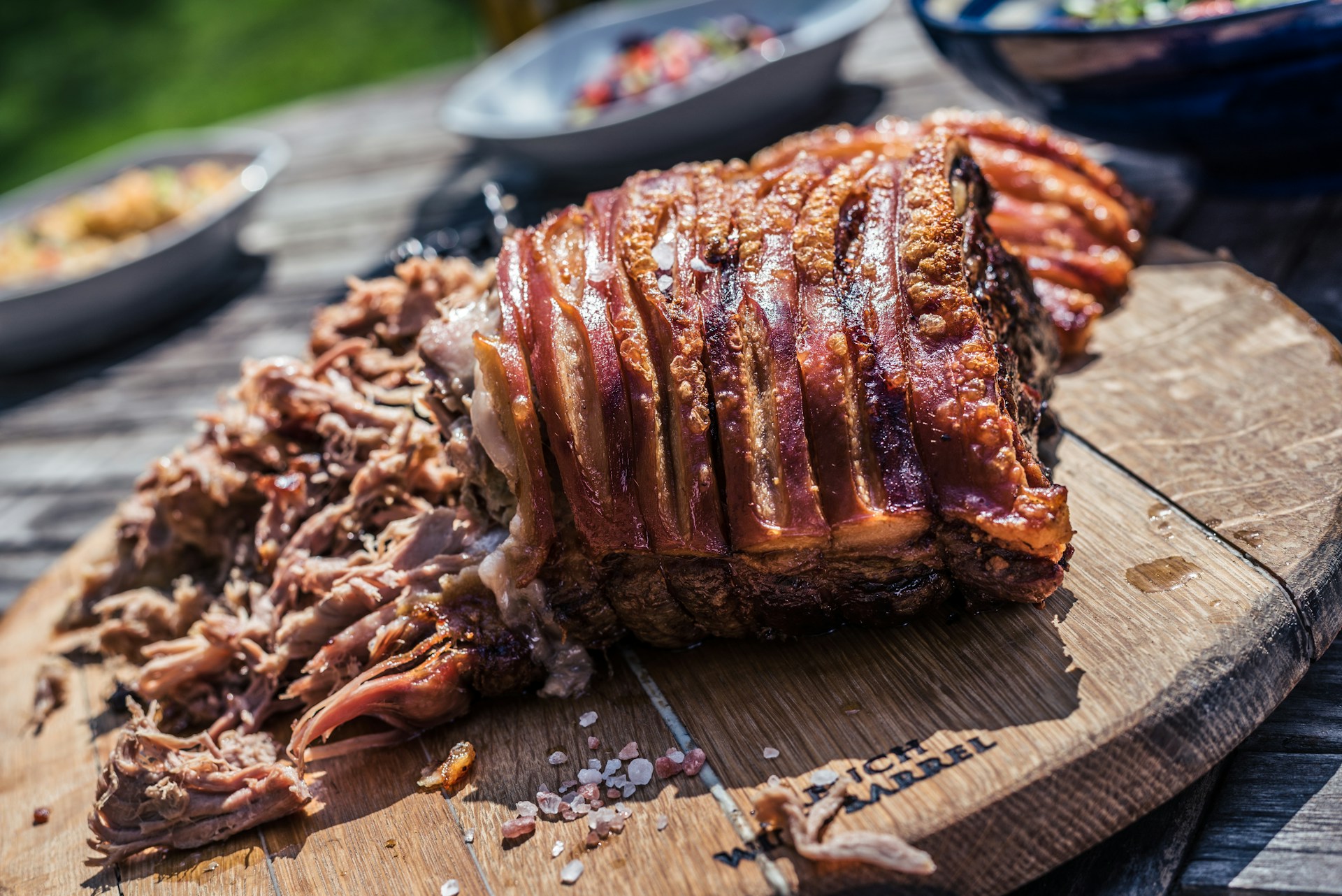
The stall belongs inside the cook window
The cook range already allows for stall variability. Do not add a second fixed stall allowance to the table. Wrapping can change the cook, but the planner does not promise an exact time saving. An unwrapped cook can exceed the window. Leave buffer and measure.
Pork Shoulder (Boston Butt) planning windows
Fully thawed refrigerated start; preheated stable indirect pit; pieces/racks spaced in one layer; rest, setup and buffer excluded. Use the largest single cut weight and typical thickness. Default wrap: foil. Default rest: 60 min, separate from the table.
| Single cut weight | 250 F | 275 F | 300 F | 225 F |
|---|---|---|---|---|
| 6 lb | 7 hr 30 min to 10 hr 30 min | 6 hr 45 min to 9 hr 45 min | 6 hr 15 min to 8 hr 45 min | 10 hr 15 min to 17 hr 30 min |
| 8 lb | 8 hr 45 min to 12 hr 15 min | 8 hr to 11 hr | 7 hr 15 min to 10 hr 15 min | 12 hr to 20 hr |
| 10 lb | 9 hr 45 min to 13 hr 45 min | 8 hr 45 min to 12 hr 30 min | 8 hr to 11 hr 30 min | 13 hr 15 min to 22 hr 30 min |
| 12 lb | 10 hr 45 min to 15 hr | 9 hr 45 min to 13 hr 30 min | 8 hr 45 min to 12 hr 30 min | 14 hr 30 min to 24 hr 30 min |
Interpret the range: Planning assumption anchored to published procedure, not measured or calibrated by Weekend Pitmasters. Thickness, shape, stall, airflow and pit control change the finish. Supported weight limits: 4 to 12 lb. Other-temperature rows are uncalibrated model conversions. No pit, bone, fuel, or weather percentage is added. Different wrapping can move the actual cook outside the window.
Published procedure and model distinction
275 F; bone-in 8-10 lb butt, pan/foil near 6 hours, about 8 hours total; 30-45 minute rest separate. Optional injection is not adopted. Model widens range and defaults to 60 minute rest.
Other supported temperatures use anchorTempF/pitTempF for planning only; not an experimentally validated heat-transfer law. No pit, fuel, bone, cold-start or wrap percentage penalty. Wrap only after bark sets; use tenderness and measured temperature, not the clock.
A worked dinner plan
Illustration: 8 lb Pork Shoulder (Boston Butt), 250 F, typical size, foil wrap. Cook window 8 hr 45 min to 12 hr 15 min. Add 60 min rest, 30 min buffer, and 45 min startup. These are separate allowances.
- Light the fire: Sat 3:30 AM
- Meat on: Sat 4:15 AM
- Latest planned pull: Sat 4:30 PM
- Serve: Sat 6:00 PM
This is a local-wall-time illustration, not a dated promise. The live planner uses your device timezone and elapsed time across daylight-saving changes. A ready-early cook needs controlled holding. If startup has passed, move dinner later or choose a shorter matching cook.
Frequently asked questions
How long should I plan for this cut?
For 8 lb, typical size, and 250 F, the shared model returns 8 hr 45 min to 12 hr 15 min. Rest of 60 min, startup, and buffer are separate. This is an uncalibrated planning estimate, not a measured result.
How does weather affect my BBQ cook?
Wind, cold, and rain can make grate temperature harder to maintain. Check the grate, keep suitable spare fuel, and allow buffer. The planner shows weather context but has no validated weather percentage timing penalty.
Can I hold cooked meat in a cooler for a fixed number of hours?
A cooler does not guarantee a safe duration. Use temperature-controlled hot holding at 140 F or above and check the food with a thermometer. Refrigerate perishable leftovers within 2 hours, or within 1 hour above 90 F. Reheat leftovers to 165 F.
How long should I rest smoked meat before slicing?
Use the cut-specific rest recommendation. Brisket and pork shoulder default to 60 minutes. Whole beef, pork, and lamb cuts require at least 145 F and 3 minutes rest. Rest is not a promise of safe holding. Hold ready food at 140 F or above and measure its temperature.
Optional tools
As an Amazon Associate I earn from qualifying purchases. Purchases through these paid links may earn a commission at no extra cost to you. Check compatibility with your cooker.
- TempPro TempSwift Instant Read Meat Thermometer
- TempPro TempSpike Wireless Meat Thermometer with 2 Probes
- FOGO Super Premium Oak Hardwood Lump Charcoal
- INKBIRD ISC-027BW Smoker Temperature Controller Fan
Plan your cook
Work backward from dinner with a cook window, rest, startup, and buffer. Check the actual temperature and tenderness as you cook.
Related guides
Boston butt versus picnic shoulder
Use the Boston butt model only for a matching roast. Picnic shoulder differs in shape. Plan from the largest individual roast, not the combined weight of two pieces. Keep space for airflow.
How to make pulled pork
Season the refrigerated shoulder, preheat the cooker, and cook indirectly. Check bark before a wrap. Finish when several spots probe tender and the meat pulls apart easily. Rest before shredding. A displayed temperature alone does not establish pull-apart texture.
Friday night planning for Saturday guests
Work backward from your meal time using the upper cook window, pit startup, rest, and buffer. A Friday evening start is needed only when the selected inputs require it. Arrange supervision of any overnight fire. If the pork finishes early, use measured, temperature-controlled hot holding at 140 F or above.
The stall is already part of the planning window
Do not add a second arbitrary stall penalty on top of the model range. Unwrapped or unusually shaped roasts may still take longer. Check grate heat and use the planner's buffer rather than chasing a promised finish time.